Book Reviews
Five Common Mistakes When Building a Chess Library
Most chess libraries are not built so much as accumulated. A raffle prize here, a charity-shop find there, a panic purchase the week before a tournament. Ten years on you have three shelves of books and a quiet suspicion that most of them never taught you anything.
That is not a failure of enthusiasm. It is a failure of method, and the method failures are predictable. Here are five that show up again and again, with what to do instead.
Buying faster than you can read
Chess books are cheap individually and lethal collectively. A club player working properly — pencil in hand, board out, exercises attempted before the answers are read — gets through perhaps three to six instructional books a year. Buy ten a year and the backlog compounds until the unread pile is taller than the read one.
The answer is not to stop buying. It is to make buying deliberate:
- One in, one out. If the shelf is full, something leaves before something arrives. Club juniors and charity shops will take the surplus.
- Read the sample first. Most retailers show a chapter or a complete game. If the prose makes your eyes slide, reputation will not save it.
- Check for overlap. A third general guide to the middlegame is not a library; it is a duplicate with a different cover.
- Buy for the next six months, not the next six years.
A related trap is buying the whole set at once. A five-volume course is a commitment, not a bargain, and the first volume is usually the only one that gets finished.
Treating endgames as reference material
Endgame books sit on the shelf looking authoritative. They read like dictionaries — volumes you consult when the need arises. In practice they are the highest-yield study material in the game, and the players who improve fastest treat them as coursework rather than reference.
A method that works:
- Choose one general endgame manual and stay with it. Two half-finished endgame books are worse than one finished one.
- Set the position on a board with real pieces and try to solve it before reading the solution.
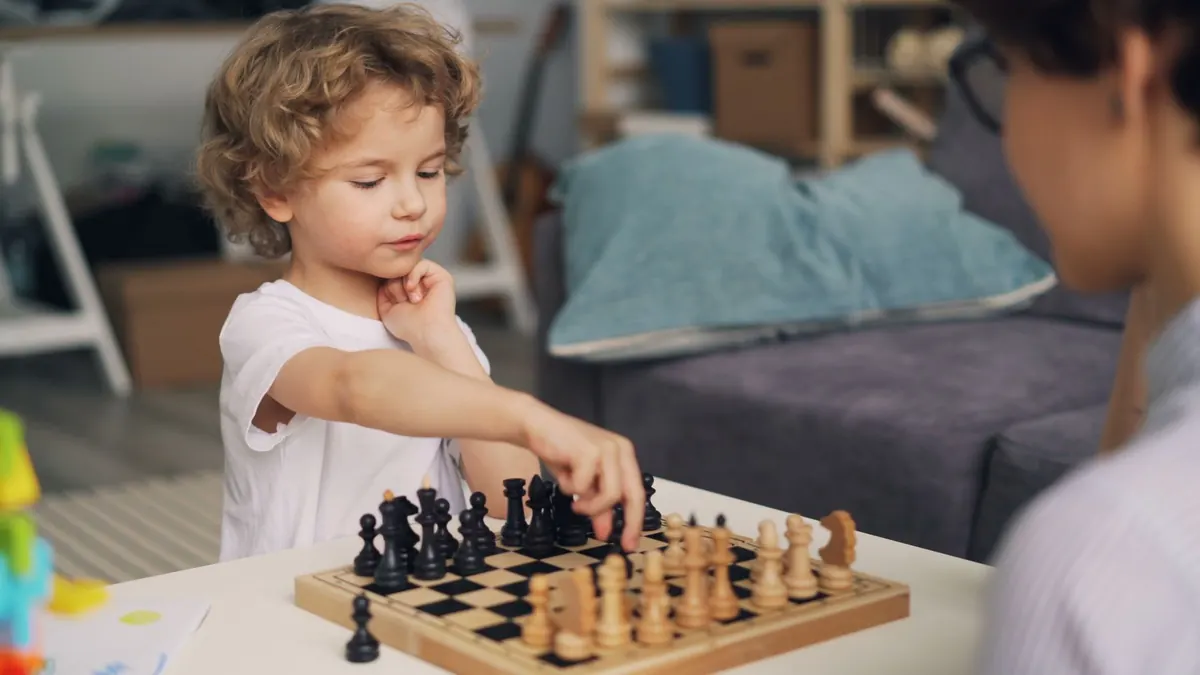
- Play the resulting positions out — against a clubmate or a chess engine — until the technique stops feeling like guesswork.
- Return to it every few months. Endgame knowledge decays quietly, and the rook endings you understood in March can be a fog by November.
Twenty minutes three times a week will do more than a heroic weekend once a year.
Buying books for the player you would like to be
Ambition is a poor purchasing guide. Collections of annotated games by great players are wonderful books, but if you cannot yet sense when a position calls for a pawn break, the notes will read like poetry in a language you are still learning. The same applies to advanced theoretical works on structures you have never played.
A workable rule: buy one level above your current comfort zone, and no higher. A quick test when you are browsing in a shop or reading a sample online — open the book at random and read a single annotation paragraph. If most of it is unclear, it is a book for later. Add it to a wish list and come back in a year; if it still appeals, it is probably time.
Openings deserve special caution. Chasing whatever looked sharp in the latest big tournament leads to a shelf of half-learned lines and no deeper understanding of the positions you actually reach.
Never revisiting a book you own
A first pass through a good chess book gives you ideas. A second pass gives you habits. Most of us treat a book as finished once the last page is turned, which is a bit like buying a set of weights and lifting them once.
Make revisiting easy:
- Write in your books. Date the inside cover, mark the games that beat you, note the moment you went wrong.
- Keep an active shelf of three or four titles within arm's reach of where you study. Everything else can live further away.
- Keep a notebook of positions you failed and return to them a month later. Solving them cold, with no memory of the hint, is the real test.
- Reread with a purpose. Second time through a games collection, cover the moves and guess. That turns a pleasant read into training.
Rereading is also the cheapest improvement available. No postage, no waiting, and the material is already at the right level — it is the level at which you chose it.
Letting the shelf organise itself
A library you cannot use is a wall decoration. Sort by broad subject — openings, middlegame, endgames, games collections, general reading — and roughly by level within each section. Keep a simple list on your phone so you can check what you own before buying a duplicate. Put the two or three books you are actually working through where you can see them, and let the rest rest.
If you cannot find a book in ten seconds, it may as well not be on the shelf.
A library that earns its shelf space
None of this requires discipline for its own sake. It requires deciding what the library is for. A working chess library is small, slightly battered and heavily annotated. It has a few books you know intimately rather than fifty you have skimmed.
If you want a place to start, do this:
- Pick up the endgame book you have been avoiding and spend twenty minutes with it this week.
- Choose one book from your shelf to reread properly, and put it beside your board.
- Before the next purchase, check whether anything on the shelf already covers the same ground.
Do that for a year and your rating may not leap, but your understanding will rest on something more solid than a stack of promising spines. Buy less. Finish more. Go back.
Photo: JeongGuHyeok / Pixabay
Related Articles